 mammoth templates
Knowing the flags is not the same as having a workflow. These ten playbooks turn Codex into a repeatable process: each one states when to use it, which approval/sandbox profile to run, what to put in AGENTS.md, the exact prompts for each step, the checkpoint that proves the step worked, the codex exec automation for CI, and the failure modes to expect. They cover shipping a feature in slices, test-first bug fixing, safe refactoring, a review gate, a coverage sprint, dependency upgrades, docs from code, CI failure triage, security sweeps, and staged migrations of legacy code.
Three templates (task brief, review rubric, PR checklist) make delegation precise, and two dependency-free Python scripts automate the heavy lifting: run_tasks.py runs a list of Codex tasks - optionally each in its own git worktree, optionally in parallel - and writes a summary; review_gate.py runs a read-only review and turns the verdict into an exit code for pre-push hooks or CI. Both support --dry-run and were exercised against a stub CLI before shipping.
Codex is evolving quickly. Prompts and playbooks are tool-agnostic where possible, and every place that depends on a CLI flag or a documented default is marked to verify with codex --help and the current OpenAI documentation.
Highlights
- 10 complete playbooks with prompts, checkpoints, CI automation and failure modes
- Task brief, review rubric and PR checklist templates
- run_tasks.py: batch / parallel / git-worktree task runner with summaries
- review_gate.py: read-only review that returns a pass/fail exit code
- Both scripts have --dry-run and were tested against a stub CLI
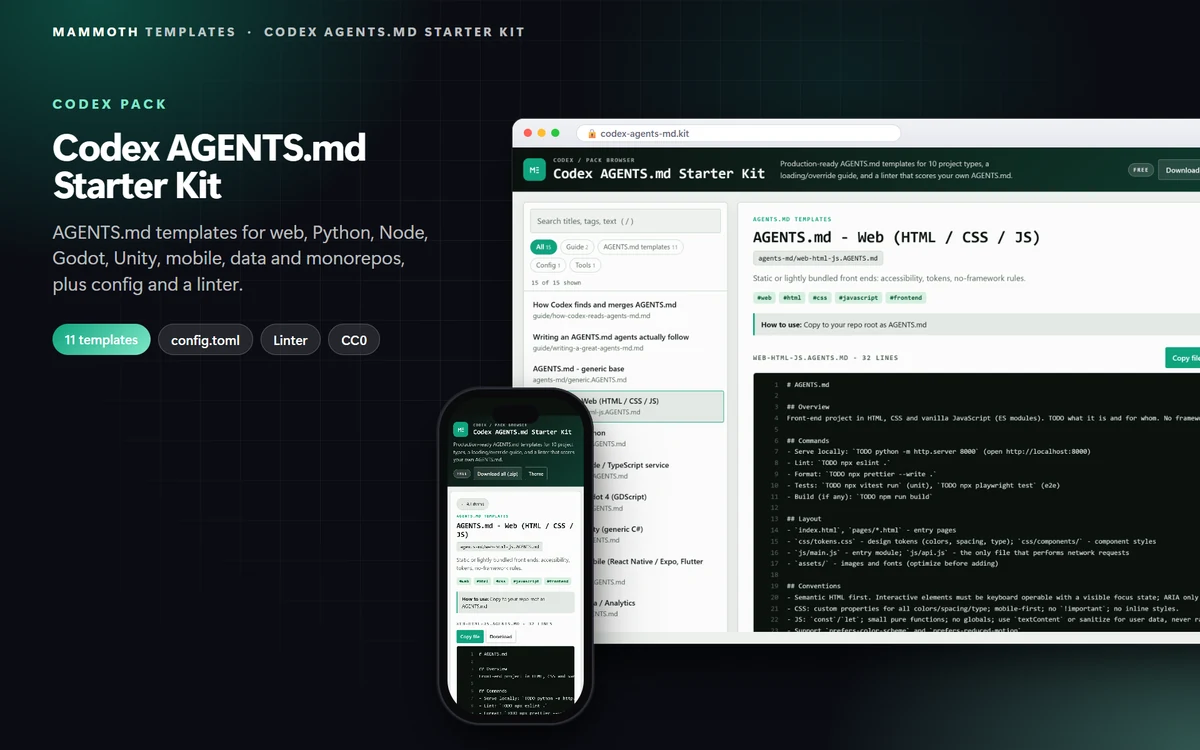
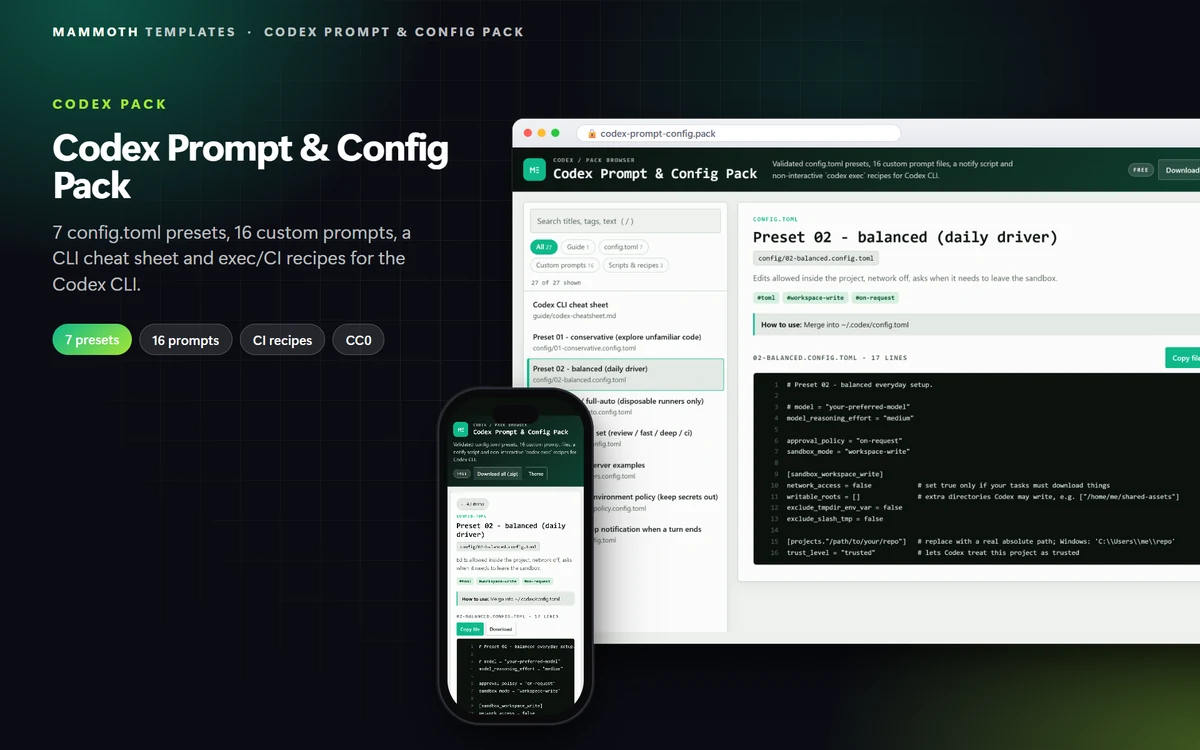
- Pairs with the Codex AGENTS.md Starter Kit and Prompt & Config Pack